
Lecture: Water Board on the future
Contact
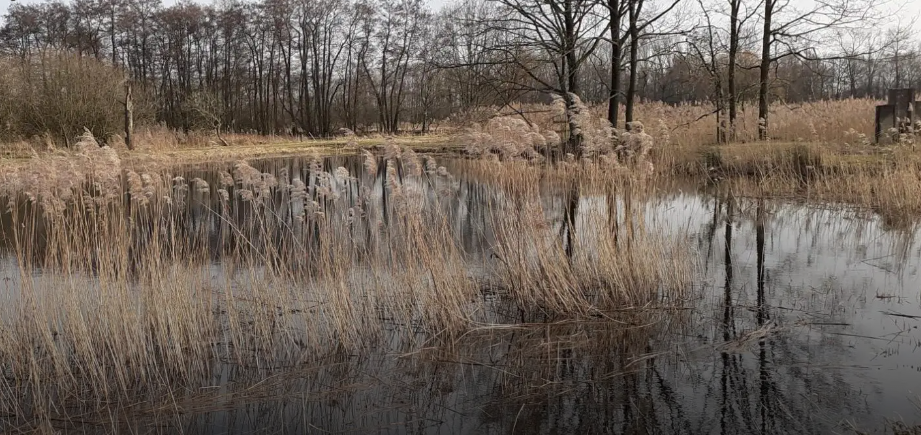
‘Working with the Water Board towards a future-proof living environment’ – Eric de Ridder (Water Commissioner, Dommel Water Board) will speak on this topic. Venue in Eersel – Kempenmuseum. Doors open at 7.30 pm; the lecture begins at 8.00 pm. Free for members; non-members pay €5 on entry to the venue. Registration is required by 12 December 2026 via secretaris.ivndekempen@gmail.com.
Working with the water board towards a future-proof living environment. The climate is changing; lan…
‘Working with the Water Board towards a future-proof living environment’ – Eric de Ridder (Water Commissioner, Dommel Water Board) will speak on this topic. Venue in Eersel – Kempenmuseum. Doors open at 7.30 pm; the lecture begins at 8.00 pm. Free for members; non-members pay €5 on entry to the venue. Registration is required by 12 December 2026 via secretaris.ivndekempen@gmail.com.
Working with the water board towards a future-proof living environment. The climate is changing; longer periods of persistent drought and heavy downpours show that our environment is not yet prepared for this. The water system has also proved to be vulnerable. The weather is becoming more extreme, whilst at the same time pressure on space is increasing and more (ground)water is being consumed. Moreover, despite all our efforts, our water is still not clean enough. There are also other challenges in the living environment, such as nature restoration, the energy and agricultural transitions, and the housing challenge. The water system plays a crucial role in addressing all these challenges. By 2050, the De Dommel Water Board aims to have a living environment that is ready for the future and a water system that is fit for purpose. The latter means: a water management system that is robust, flexible and in balance with nature and the environment, and which ensures good water quality. The dry summers of 2018, 2019, 2020 and 2026, and the flooding in 2021, 2023 and 2024, highlight the urgency of the situation and demonstrate that our approach to water must change fundamentally. We refer to this major challenge as the water transition. This means that the water board no longer wishes primarily to drain water away, but rather to retain it. It no longer aims to clean up what is polluted, but to prevent water from becoming polluted in the first place. And it no longer seeks to influence the environment and the water system to enable certain functions, but to help adapt those functions to the changing conditions in the environment and the water system. Innovation, circularity, transition processes and collaboration with partners will shape the water authority’s agenda in the coming years.
Water Commissioner Erik de Ridder will guide you through these developments and show you how you too can contribute to a future-proof living environment. Erik de Ridder has been Water Commissioner at the De Dommel Water Board since May 2019. As chair of the General and Executive Committees, he represents the water board in external dealings and is responsible for its administrative processes. With around 600 staff, the De Dommel Water Board manages water in Central Brabant (approx. 900,000 inhabitants) by regulating (ground)water levels, treating sewage and ensuring clean water in streams and ditches. Before becoming water commissioner, Erik served for nine years as a councillor in the municipality of Tilburg, with responsibility for portfolios including Finance, Economic Affairs, Work and Income, and Care and Welfare.
When
- Tuesday 15 December 2026 8.00 pm – 10.00 pm