
Accessible Ommetje Knegsel
The first mention in history about Knegsel dates back to 1281. The village was then called "Cneczele". The village was originally located where the Old Cemetery is still located but relocated after 1688, when it was largely destroyed by French army troops.
Residents settled elsewhere, creating hamlets - "corners" - such as Sneidershoek, Driehuis, Den Hoek, Wolfshoek, Nardushoek. In search of fertile land, people settled more in the vicinity of the Rijt brook valley, and the road pattern created a brink, today's village centre. For this reason, Knegsel is also called a brink village, meaning "a plaetse built on three sides".
Traditionally, Knegsel has been an agricultural ...
The first mention in history about Knegsel dates back to 1281. The village was then called "Cneczele". The village was originally located where the Old Cemetery is still located but relocated after 1688, when it was largely destroyed by French army troops.
Residents settled elsewhere, creating hamlets - "corners" - such as Sneidershoek, Driehuis, Den Hoek, Wolfshoek, Nardushoek. In search of fertile land, people settled more in the vicinity of the Rijt brook valley, and the road pattern created a brink, today's village centre. For this reason, Knegsel is also called a brink village, meaning "a plaetse built on three sides".
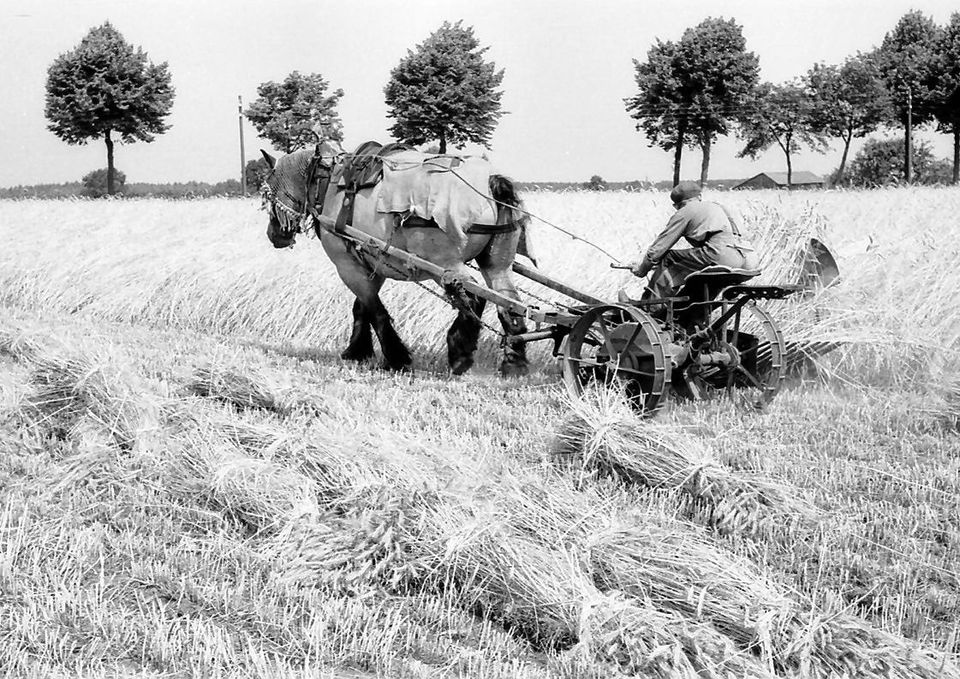
Traditionally, Knegsel is an agricultural village. Cooperation was necessary, hence a Farmers' Union was established even before 1903. Butter making was one such form of cooperation, and from 1897 a shed, located next to the transformation house, served as a butter factory under the name De Vooruitgang. Around 1917, the small hand-powered dairy transferred to a steam-powered dairy nearby.
Knegsel already had a few taprooms in the 19th century, but a real café near the church came about in 1899, when Johannes Heeren had a café built on the Groen. Café 'in 't Groen' later became café 'Klein Antwerpen' and today it is the house ( het Groen 32 ). For decades, the village square also had a grocery shop ( het Groen 30 ). The village square is now used for village events and under the beautiful lime trees are the Jeu de Boules courts. The square is often the starting and finishing point for cyclists and walkers.
Gildenekker
The field you come across is called the "Gildenekker" and is owned by the Guild H.H. Monulphus and Gondulphus. As early as 1832, the Guild owned this field to earn annual income with the harvest proceeds. A lot of Early Medieval pottery was found on the field, which may indicate earlier settlement.
Notable parish priests
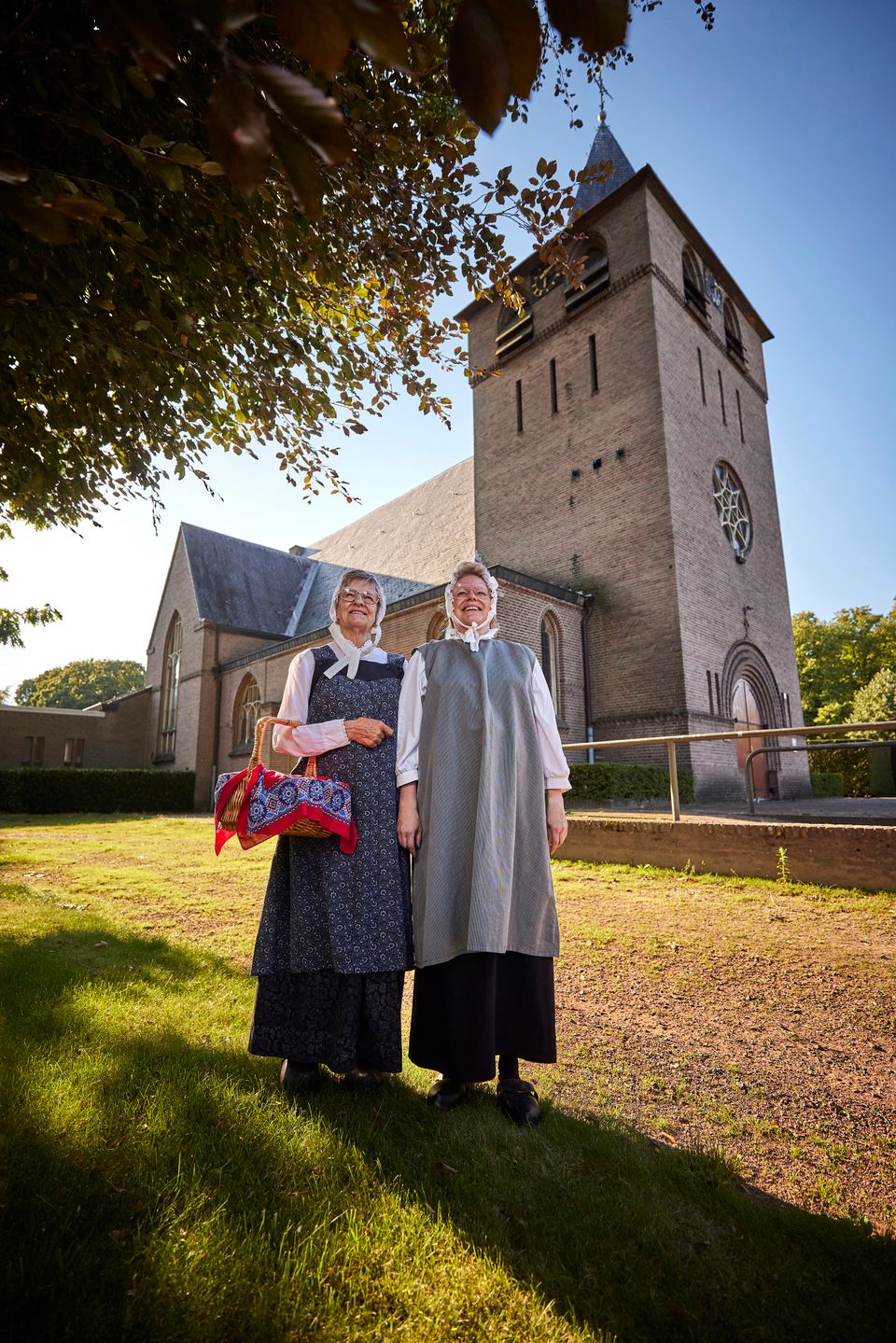
Knegsel has known special, sometimes striking, parish priests. Pastor Peters (1967 - 2003) was the last "own pastor". On his farewell and departure from Knegsel, the statue "Mr Pastor" was unveiled. It stands directly opposite the church.
This is what you are going to see
- 56
- 06
- 04
- 05
- 56