Imagine the Middle Ages. A time of knights, castles and... freedoms? Yes indeed! And in the heart of the Kempen, where cosy Eersel now lies, the inhabitants were given a very special status some 700 years ago: that of "freedom". A unique privilege from the Duke of Brabant, which coloured and shaped Eersel.
But what exactly did this "freedom" mean?
It was more than just a nice word. It meant that Eerselnaren were privileged citizens within the duchy. They enjoyed special rights, sometimes even called "city rights", that distinguished them from the inhabitants of surrounding villages. Think fewer military obligations, not having to pay tolls within Brabant, and in some cases even the right to levy their own taxes! Imagine, setting your own local rules... that was pretty revolutionary in those days! Although the exact date when Eersel acquired this coveted status is shrouded in mystery (the original deed has unfortunately been lost), the year 1325 pops up regularly. So would it really be around 700 years ago that Eersel took this special step? It remains a fascinating mystery that piques curiosity!
The road to freedom: a strategic game
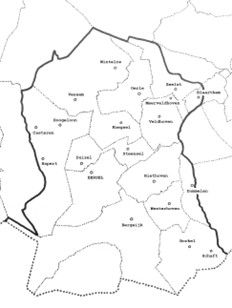
Why did the Duke of Brabant just give away these privileges? It was a smart move in a political chess game. After all, in the Meierij, where the duke ruled, there were also other rulers: the church, local lords... They had their own influence and collected taxes. By founding new settlements and later giving them freedom status, the duke attracted more people. More inhabitants meant more power for him. Eersel, with its strategic location in the "eninge van de Kempen" - an area with its own jurisdiction - probably played an important role in this. There is even evidence that Eersel was already a central place where justice was dispensed for the whole of the Kempen in the 12th and early 13th centuries!
A smart move by the Duke!
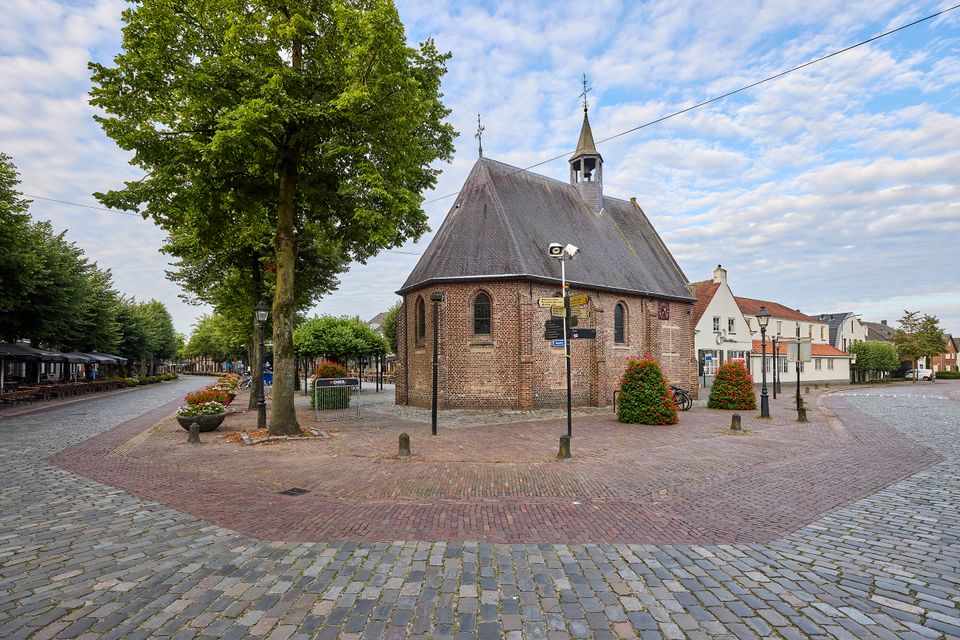
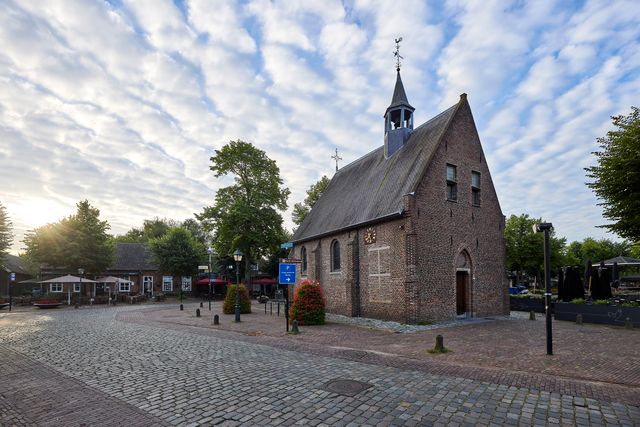
The foundation of the settlement around the Markt, possibly in the 13th century by the duke, followed a recognisable pattern: a wide square with a central chapel. Although the chapel's dedication deed dates from 1464, an earlier version could well have existed much longer. Some historians see this foundation as a counterweight to the power of the lords of Bergeijk. A smart move by the duke! Interestingly, excavations near the church have found traces of habitation until the mid-13th century, but not for a long period after that. Could the attraction of the new settlement around the Market Square have pulled the inhabitants away? Or did the "late medieval transition" play a role, with people moving from the wet stream valleys to higher ground? Questions that make Eersel's past extra exciting!

A voice of its own: the bench of aldermen
An important part of "freedom" was its own aldermen's court. This local court ruled on everyday matters and minor offences within the area covered by Eersel - often larger than the village itself. For serious crimes, people continued to rely on the bench of aldermen in 's-Hertogenbosch, but for the people of Eersel it was a sign of autonomy to be able to settle their own disputes locally. As early as 1254, the aldermen of Eersel were first mentioned in a deed, an early indication of Eersel's important position.
More than a village, less than a town?
The privileges of a freedom were sometimes popularly confused with city rights. And indeed, if you search for when Eindhoven was granted city rights, you will come up with an early date. That is because "liberty" was referred to as "ville" in Latin, literally meaning "village", but soon became associated with the French "ville" for city. Eindhoven town archaeologist Nico Arts developed an interesting model to determine whether a place had the characteristics of a small town in the Middle Ages. Let's put Eersel along this yardstick:
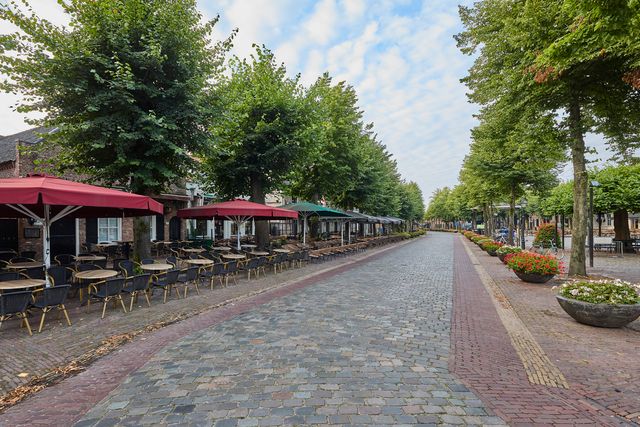
Population: With between 178 and 222 households in the 15th century, Eersel was larger than most surrounding villages. There were two distinct residential centres: around the Markt and near the cemetery, with a shift from the latter to the former during the Middle Ages. There were also hamlets around the village.
Group cultures: Although there is evidence of local elite (horsemen's marks, a crossbow arrow), large merchant houses and luxury goods were probably less prominent than in larger towns.
Professions: The professions that appear in the oldest cijns registers (1340-1351), such as furrier, cook, miller, blacksmith and weaver, indicate an economy that was strongly oriented towards the surrounding countryside. The presence of a cook suggests that there may also have been inns.
Market and clients: Eersel had a market early on, probably with a regional function. The levying of market tolls existed before 1203.
Countryside: Trade was probably mainly focused on the surrounding villages, although Eersel was located at a crossroads of international trade routes between Antwerp and Cologne, and between the south and Den Bosch/Utrecht.
Central place functions: Eersel had a parish church (mentioned in 1308) and possibly a chapel earlier. However, there is no evidence of medieval hospitals or almshouses.
Self-government and self-confidence citizens: The oldest mentions of the Eersel guilds date back to the end of the 15th century. The early existence of a market and road toll, which was given in loan by the duke, indicates a certain degree of autonomy.
Conclusion: a quirky "almost-town"
While Eersel may not have fulfilled all the characteristics of a full-fledged medieval town, it certainly shares many. Like Eindhoven, it balanced on the border. A key difference, however, was that Eersel, as far as we know, had no significant defences. This made it vulnerable to marauding armies in later centuries, so it could never grow into a full-fledged town.
But it was precisely this unique status of "freedom" that gave Eersel a quirky character, a sense of independence that may still be felt today. Come and taste the atmosphere yourself in this special village with its rich history!
Curious to know more about Eersel's history? Dive into the sources used for this article by clicking on the links below: Eersel: Al 700 Jaar Eigenzinnig Vrij! & Eersel: Al 700 Jaar Eigenzinnig Vrij! (with images)
You can read even more about Eersel below!
-
8x the best indoor activities with children in the Kempen
-
Heritage Days
-
Cheers party

-
Ice cold the tastiest
-
Winter Village Eersel
-
Eersel fashion show